
Curriculum & Educator Resource Center
How to Use The Memory Box at Home and in the Classroom
By Homer Hartage
The Memory Box & Charlotte’s Big Surprise in your hands, you’re probably holding something else, too—questions. Sometimes the questions belong to a child (“Why did Grandpa forget my name?”). Sometimes they belong to an adult (“What do I say without making this scary?”). And sometimes the question is simply this: How do I use this book in a way that truly helps—not just once, but repeatedly? If you’re holding—that’s the reason I created this Curriculum & Educator Resource Center.
My wife, Rose, and I owned and operated a child care center for fourteen years, serving early learners and their families. We learned something early that has stayed with me: children rarely need one perfect conversation. They need steady language, gentle routines, and a safe place to return to the same big idea as they grow.
As a professional guardian, I also walk alongside families when these changes become part of daily life. I’ve seen how much a gentle, steady approach matters: children do better when they’re given simple words, repeated reassurance, and a safe way to stay connected.
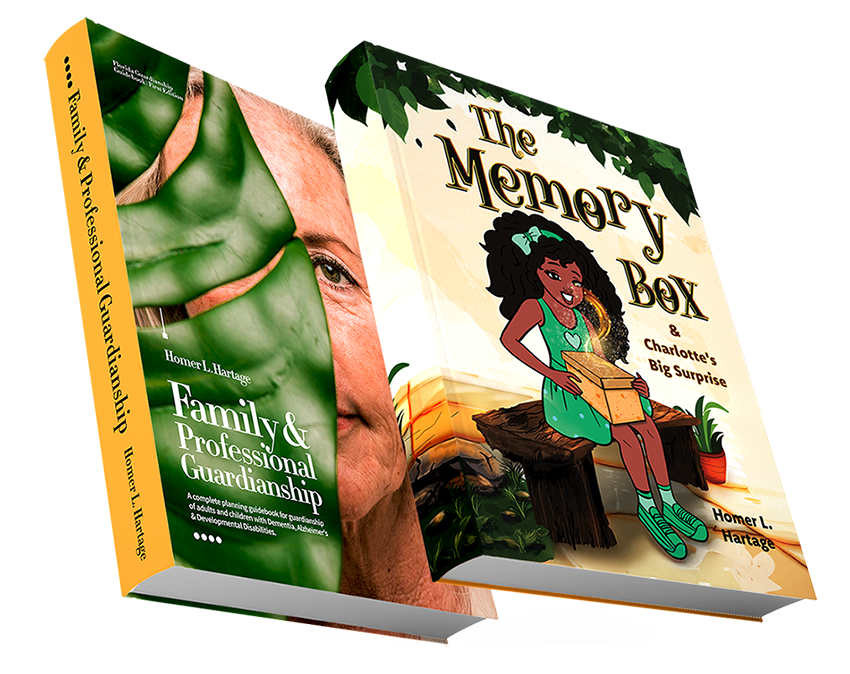
My earlier trade books—Family & Professional Guardianship, which helps families and professionals understand guardianship roles and responsibilities with clarity and compassion, and Parentification: Caregivers in Crises, which gives language to the overlooked reality of children carrying adult responsibilities—reflect this same focus on guiding others through complexity. The Memory Box & Charlotte’s Big Surprise is also a trade book, simply created in a teaching format so it can be used repeatedly with children at home, in classrooms, and in counseling settings, rather than as a one‑time story.
Why this isn’t “just a story” (and why that matters)
Many children’s books are meaningful, but they’re designed for a single moment. That’s fine—beautiful, even. But when a child is living through change, one read rarely answers everything. Questions come back. Feelings change shape.
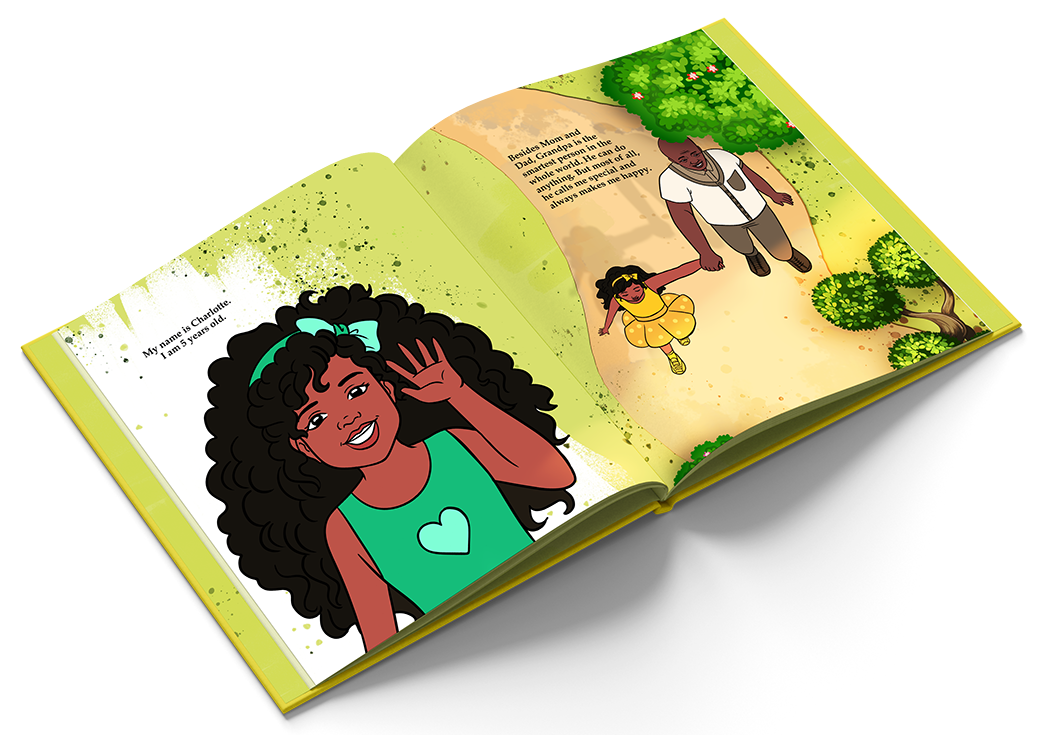
The Memory Box is meant to function as a picture book with curriculum‑based memory activities. In plain terms: the story opens the door gently, and the activity helps children step through that door in a way that feels safe.
Start with the simplest goal: safety first
Before we get into steps, one guiding idea that works in homes, classrooms, and counseling settings:
So the goal isn’t to “teach” memory change the way we teach multiplication. The goal is to create a gentle container: calm voice, short sessions, and permission for mixed feelings.
How to read the book (so it feels like a comfort, not a lecture)
When adults feel nervous, we sometimes read quickly. Children notice that. When we slow down, children relax.
Try reading as if you’re telling a story to a child you love—because you are.
Pause once or twice when Charlotte’s feelings are clear. Instead of asking many questions, choose one gentle prompt: “What do you think Charlotte is feeling right now?”
Then—this is important—accept whatever comes. A child might answer. A child might shrug. A child might stay quiet. Quiet is not failure. Quiet is processing.
Introducing the Memory Box
Here’s the line to use—at home, in class, or in a counseling office:
And now comes the most important part—the question that makes the activity child‑centered:
Then pause. Silence is thinking.
Making the Memory Box in the classroom
Teachers are busy. Class time is precious. And sensitive topics require care. That’s why the best classroom approach is a week‑long rhythm with short sessions, not one long lesson.
A teacher might read the story early in the week and return to it in small ways. Students can create one Memory Box item one day, then another item the next. Sharing can be optional or private.
“A story can open the door, but gentle routines help children walk through it.”
Children rarely understand big changes in one moment. They need simple words, steady repetition, and a safe way to return to the same idea over time.
The Memory Box is more than an activity. It becomes a familiar routine children can rely on, helping them stay connected to love while making sense of change at their own pace.
Whether at home or in the classroom, small, consistent moments create the greatest impact. A calm voice, a short story, and one meaningful connection at a time.
Over time, these gentle practices build trust, emotional safety, and the confidence children need to ask questions, express feelings, and feel supported as they grow.
Implementation Paths — Choose Your Setting
Back to Curriculum & Educator Resource Center

Homer L. Hartage
Author, Thought Leader, President & CEO
Share this Article
Making the Memory Box at home: a cozy 3-moment routine
At home, the best approach is a small routine you can repeat. You don’t need a craft marathon. You need something that fits real life.

Moment 1: Read
Read the story slowly, pausing once or twice for feelings.

Moment 2: Choose one memory
Invite your child to add one thing to the Memory Box today.

Moment 3: Connect
End with one steady sentence that your child can carry.
- “Love stays.”
- “You are still special.”
- “We can still be close.”
Homer’s Story That Shaped All Other Stories
Years into Homer’s work as a professional guardian, he was assigned to an elderly woman with no close family. On paper, she was just another case number. But as Homer sat with her and listened, he noticed a small cardboard box tucked beneath her bed. Inside were a few photographs, old political flyers, handwritten recipe cards, and notes yellowed with time.
Most surprising, among this cluttered box was a financial record, her deceased husband had left an annuity, enough to care for her for the rest of her life. Alzheimer’s had nearly taken this from her.
That rang out to Homer: “Please don’t let me be forgotten, care for me, remember me. This is the call of so many.”

Testimonials
Engulfed with despair, fear, anxiety, restless nights, and overwhelming sense of helplessness. Those feelings crippled me daily, not knowing what next steps to take, I felt like I was on a deserted island, not wanting to fail my loved one. Thankfully a family member put me in touch with Mr. Homer Hartage. All those negative feelings dissipated after having just one conversation.
Mr. Hartage gave a detailed explanation of my options, which allowed me to make informed decisions about the best options for my family. Again, thank you so much Mr. Hartage for picking up the phone to answer my questions and putting my mind at ease, thank you for sharing your wisdom and knowledge. Finally, thank you, sir, for your kindness. During the most stressful times in my life, you answered my call for help. May God shower you and your family with continuous blessings.
The Feacher/Blackshear Family
Honestly, if you work in healthcare and have a resident who needs a guardian I have the most amazing person, Homer Hartage. Never, EVER have I seen such love and devotion to a client in my life… it takes a lot to impress me because I have such high standards… my mind is blown. Please let him know if you should have a need for a guardian. Your client / resident truly could not be in better hands. He’s simply amazing. So refreshing to see a guardian treat their client like a loved one instead of a pay check or commodity…. I’ve never seen anything like it in my life… and I’ve been doing this a minute.
Robyn Edelstein
Owner Robyn’s Referrals
Homer Hartage is extremely passionate and dedicated to providing a service to others. I have watched Homer in action over the years. He will make sure that every measure has been taking for the safety of providing a quality service to all. His kindness along with his knowledge of delivering the best healthcare services are absolutely outstanding.
Shirley Simmons
CEO Abstract Expressionist Artist
There are not enough great things to say about Homer, feeling safe with him is made so easy. He is extremely culturally sensitive, always on time, and has your best interest at heart. He will work overtime just to make sure you and your family have everything they could ever want. Homer has become a part of my family and I feel so honoured to know him. We are glad he is our guardian.
He communicated well with the family and made sure everyone is up to date and informed. At the end of the day, he always makes the right decisions.
Leila Tiles-Lasanta
Administrative Nurse Manager
Clinical Coordinator Nurse Residency Program
Hudson Regional Hospital Secausus,NJ
Books By Homer
My writings are to ensure that no life is reduced to just paperwork, no story disappears without being told, and no family is left navigating responsibility alone.
My work resonates with caregivers, families, professionals, and anyone who believes that memory, dignity, and responsibility are essential. My book catalog includes trade and children’s books.
Partner Bookstores
You have the option to purchase the book on the AgedCare Guardian website or any of our trusted partner bookstores. Simply click below on the brand of your choice and order your copy at our partners’ online stores.
Distributed by IngramSpark and Baker & Taylor.