Guardianship Resource Center
Guardian vs. Power of Attorney: What’s the Difference?
Quick answer: A power of attorney is a document someone signs voluntarily, while they still have legal capacity, giving another person authority to act on their behalf. A guardianship is a court-ordered arrangement, created only after someone has already lost the capacity to make their own decisions. The single most important distinction: if capacity is already gone, it’s too late to create a power of attorney, guardianship may be the only option left.
That timing detail trips up more families than almost anything else in this process. Here’s the fuller picture.
What Is a Power of Attorney?
A power of attorney (POA) is a legal document in which one person, the “principal”, grants another person, the “agent” or “attorney-in-fact”, authority to act on their behalf. It’s created voluntarily, and it requires the principal to have legal capacity at the moment they sign it.
There are a few common types:
- General power of attorney, broad authority over financial and legal matters, which typically ends if the principal becomes incapacitated (unless it’s “durable”, see below)
- Durable power of attorney, includes specific language stating that the agent’s authority continues even if the principal later becomes incapacitated; this is the version most estate planning attorneys recommend for aging-related planning
- Healthcare power of attorney (or healthcare surrogate/proxy), authorizes an agent specifically to make medical decisions if the principal can’t
- Limited or springing power of attorney, authority restricted to specific tasks or triggered only by a specific event
A power of attorney is fast, inexpensive relative to court proceedings, and doesn’t require ongoing court supervision. But it depends entirely on the document existing before it’s needed.
What Is Guardianship?
Guardianship is a court process that appoints someone to make decisions for a person the court has determined lacks the capacity to make those decisions themselves. Unlike a POA, no advance signature is required, which is exactly why it exists for situations where no POA was ever put in place, or where the existing legal tools don’t cover what’s actually needed.
Guardianship comes with built-in court oversight: reporting requirements, accountings, and a judge who retains authority to review or modify the arrangement. That oversight is a feature, not a flaw, it exists specifically because guardianship removes someone’s legal autonomy, and the law wants a check on how that power is used.

Key Differences at a Glance
|
|
Power of Attorney |
Guardianship |
|
Created by |
The individual, voluntarily |
A court order |
|
Requires capacity to establish |
Yes, must be signed while competent |
No, created because capacity is already lost |
|
Court involvement |
None, typically |
Ongoing court supervision |
|
Speed to establish |
Fast (days) |
Slower (weeks to months) |
|
Cost |
Relatively low |
Higher, filing fees, evaluations, attorney fees |
|
Oversight after creation |
Minimal |
Regular reporting and accountings required |
|
Can be revoked by the individual |
Yes, while they have capacity |
No, only a court can modify or terminate it |
When a Power of Attorney Isn’t Enough
Even a properly executed durable power of attorney doesn’t always cover every situation:
- The document may not exist at all. This is the most common scenario families face, no one thought to set it up while there was still time.
- The agent named may no longer be appropriate or available, and the principal, now incapacitated, can’t sign a new document naming someone else.
- Third parties sometimes refuse to honor an older POA, particularly banks or medical institutions that want more recent documentation or have specific form requirements.
- A POA doesn’t provide court oversight, which some families specifically want, for instance, when there’s conflict among siblings and everyone would feel more secure with a judge supervising decisions.
- The document’s scope may be too narrow for what’s actually needed, especially if it was drafted for a different purpose years earlier.
When Guardianship Becomes Necessary
Guardianship typically becomes the path forward when:
- No power of attorney or healthcare directive was ever signed, and the person has now lost capacity
- Existing documents are being disputed, are unclear, or are refused by institutions
- There’s genuine concern about self-neglect, financial exploitation, or unsafe living conditions that require enforceable legal authority to address
- Family conflict is significant enough that court oversight and accountability are actually wanted, not just tolerated
If you’re noticing warning signs in a parent or loved one and aren’t sure whether you’re past the point where a power of attorney could still work, our article Signs an Aging Parent May Need a Guardian walks through the specific red flags worth watching for, and what they typically mean for your legal options.
Can a Family Have Both?
Yes, and in fact many families end up using both tools at different points, or for different aspects of the same situation. It’s common for someone to have signed a durable power of attorney years earlier that still covers financial matters, while a limited guardianship is later established specifically for medical decision-making the POA didn’t clearly address. An elder law attorney can review existing documents to determine what’s already in place, what it actually covers, and whether guardianship is needed to fill remaining gaps.
The Planning Window Is Real, And It Closes
The uncomfortable truth in all of this is that the best time to set up a power of attorney is before anyone thinks it’s necessary. Once a diagnosis like Alzheimer’s has progressed, or a medical crisis has already happened, the legal window for voluntarily signing these documents closes, sometimes with no warning that it’s closing at all.
If your family still has that window open, an estate planning or elder law attorney can help put durable power of attorney and healthcare directive documents in place quickly. If that window has already passed, guardianship exists precisely so that families aren’t left with no legal path forward.
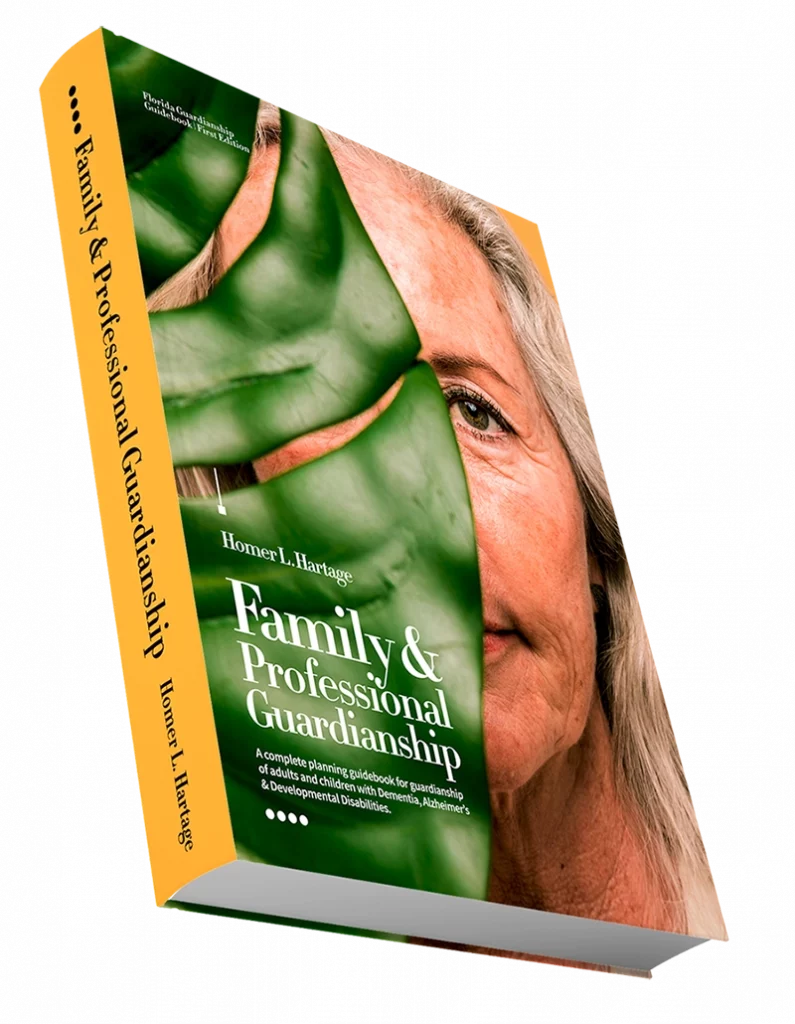
Family & Professional Guardianship
Provides useful information for individuals, families, and professional guardians, so that they can make informed decisions about the guardianship and care of their loved ones.
Guidance for Guardians
Are you navigating the fog of guardianship responsibilities? This book offers practical solutions grounded in laws and factual insights, ensuring you are never caught off guard.
Where To Buy