Parent Discovery Resource Center
Best Children’s Books About Dementia and Alzheimer’s: A Reading List
Story is one of the most effective ways to open a conversation with a child about memory loss, a point we cover in depth in our companion article, A Children’s Book About Love When People Forget. No single book fits every family or every age, though, which is why it helps to have a small shelf of options, each offering a slightly different angle. Here’s how to think about building that shelf, organized by what different books tend to do well.
What to Look for in a Book on This Topic
Before getting into specific recommendations, a few qualities to look for when evaluating any children’s book about dementia or memory loss:
- Honesty without alarm. The best books acknowledge that memory loss is real and doesn’t reverse, without presenting it as frightening or hopeless.
- A concrete, age-appropriate framing device. Books that use a specific object, ritual, or activity (a photo box, a garden, a shared song) tend to give children something tangible to hold onto, rather than an abstract discussion of illness.
- A relationship that continues, even as it changes. The strongest books in this category show that connection and love persist through memory loss, even when the relationship looks different than it used to, rather than suggesting the person is simply “gone.”
- Room for the child’s own feelings. Books that model a range of emotional reactions, confusion, sadness, frustration, and eventually a kind of peace, tend to give children permission to feel whatever they’re actually feeling, rather than prescribing a single “correct” response.
For Younger Children (Ages 4-7)
At this age, look for shorter texts, simple and concrete language, and a strong visual narrative that carries much of the emotional weight alongside the words.
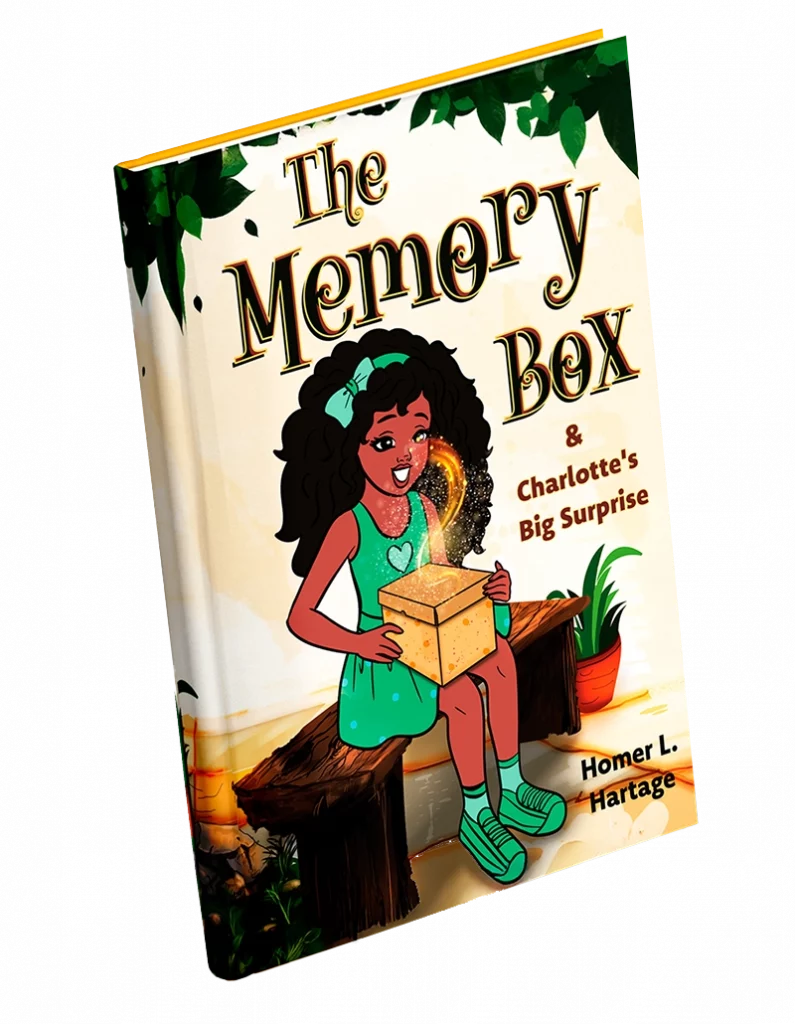
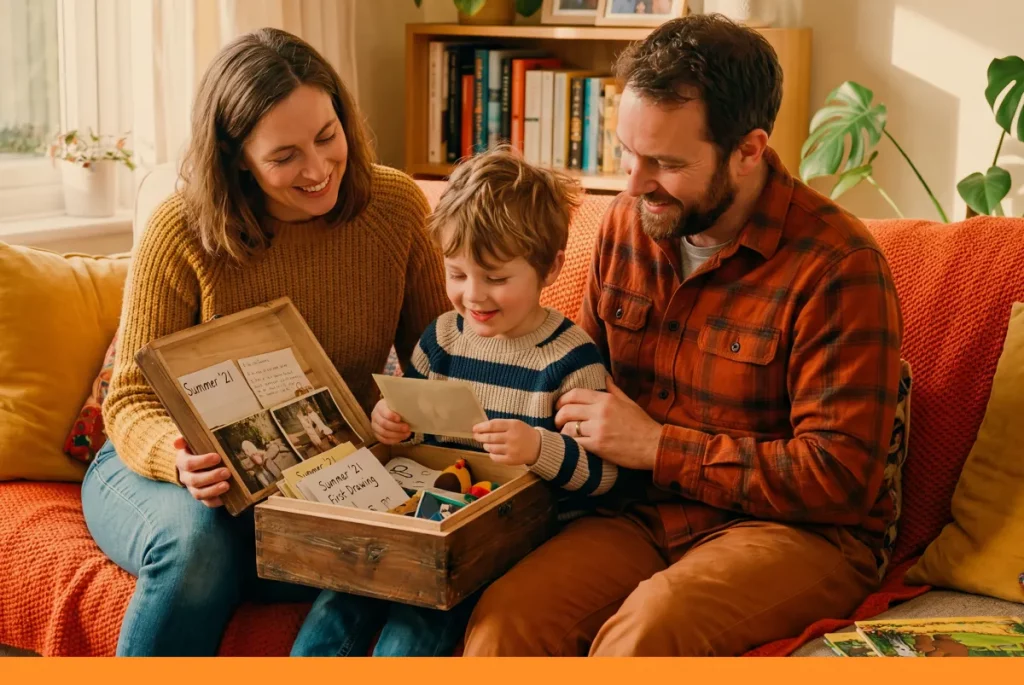
The Memory Box & Charlotte’s Big Surprise fits this age range well, following a young girl who builds a box of photographs to help her grandfather find moments of connection even as his memory changes. It’s designed specifically to be read multiple times, with a child’s understanding deepening on each reading. Our article on using story to explain memory loss goes deeper into how to use it as an ongoing tool rather than a single read.
When building out this age range on your own shelf, look generally for books that center a specific grandparent-grandchild relationship and a shared activity, rather than an abstract discussion of “what dementia is”, young children connect far more easily to a specific character’s specific experience than to general information.
For School-Age Children (Ages 8-11)
Children in this range can typically handle a bit more direct information about what’s happening medically, alongside the emotional narrative. Look for books that:
- Name the condition directly (Alzheimer’s, dementia) rather than only describing symptoms vaguely
- Include a family member’s own confusion or grief as part of the story, giving the child permission to feel similarly complicated emotions
- Offer some practical language or activity the child could actually use with their own grandparent, a memory game, a photo album, a familiar song
This age group often benefits from books read together rather than independently, since the discussion afterward tends to matter as much as the story itself.
For Preteens and Younger Teens
Fewer picture books are written specifically for this age range, and many families transition toward short chapter books, memoirs written for young readers, or nonfiction explainers alongside continued conversation (see our article on talking to siblings and teens for more on this transition). At this age, a book’s value often comes less from teaching the basic facts, many preteens already know them, and more from giving language to complicated, sometimes contradictory feelings: love alongside grief, patience alongside frustration, and the strange experience of a family member who is present but different.
Building a Family Reading Ritual
Whichever books you choose, many families find more value in how they read than in which specific title they pick:
- Read the same book more than once over months or years, rather than treating it as a single event
- Leave time after reading for questions, rather than moving immediately to the next activity
- Let your child revisit favorite books independently, many children return to a story about this topic on their own, at moments a parent doesn’t witness, simply because it’s become a familiar, safe way to process a hard topic
- Pair reading with a related activity when it fits naturally, building a memory box, looking through real family photos, or writing a letter to a grandparent, since the combination of story and hands-on activity tends to help more than either alone
Using This List Alongside Direct Conversation
A good book is a companion to honest conversation, not a replacement for it. Our Parent Discovery Resource Center has age-specific guidance for the direct conversations that tend to come up alongside, or instead of, reading time, including scripts for common questions and specific language for different ages.
The Memory Box & Charlotte’s Surprise
A heartwarming story seen through the eyes of a child, exploring the complexities of Alzheimer’s disease, family bonds, and the profound impact of memory loss on young lives.
Story Blurb
When Charlotte’s beloved grandpa no longer recognizes her face, her world crumbles. Armed with a Memory Box filled with photographs, Charlotte embarks on an emotional journey of rediscovery.
Where To Buy