
Parentification Resource Center
Signs Your Teenager May Be a Young Caregiver
Most teenagers who are quietly carrying serious caregiving responsibility at home don’t introduce themselves that way. They show up instead as exhausted, distracted, oddly responsible for their age, or “always on” in a way that doesn’t quite make sense for a teenager. Recognizing what’s actually happening changes everything about how a family, or a school, responds.
Why Recognition Matters
Without recognition, a young caregiver tends to get treated as a behavior problem, an unmotivated student, or a flaky friend. With recognition, those same signals can become the starting point for a real support plan: sharing the load, building in predictable relief, and putting practical accommodations in place before the young person hits their own limit.
The goal here isn’t surveillance, and it isn’t to slap a label on every teenager who helps around the house. It’s early, gentle recognition that leads to less burden, not more scrutiny.


The Two Questions Worth Asking First
Before running through a longer checklist, two simple questions tend to separate ordinary helping from a genuine concern:
Is this teenager substituting for an adult, or assisting one? Assistance still has adult oversight behind it. Substitution means the young person has effectively become the oversight.
Is the load leaving a mark, on sleep, attendance, safety, or health? Ordinary helping can be tiring sometimes. High-burden caregiving changes the actual shape of a young person’s week, every week.
Three Buckets of Clues
Think of these as a lens, not a verdict. Any single clue could mean any number of things. But when signals cluster across these three areas, school and work functioning, home role and behavior, and physical health and stress, young caregiving becomes far more likely, and it’s worth a gentle, direct conversation.
Bucket One: School or Work Functioning
• Chronic lateness, or a pattern of missed days with explanations that stay vague
• A noticeable drop in performance or engagement that doesn’t match the young person’s evident effort or ability
• Appearing “on call” during the day, frequent phone checking, visible anxiety about being unreachable
• Avoiding after-school activities or evening plans in a way that suggests they need to be home at a specific time
Bucket Two: Home and Role Clues
• Describing themselves as the person who keeps routines from falling apart at home, meals, supervision, logistics
• Mentioning that they monitor safety at night, or feel responsible for preventing a crisis (locks, the stove, a wandering risk, falls)
• Handling tasks that would normally require an adult: forms, benefits paperwork, calls to a landlord, coordinating appointments
• Acting as the primary interpreter or advocate in adult-facing conversations, medical visits, school meetings, housing or agency calls
Bucket Three: Health and Stress Clues
• Persistent sleep loss, or describing themselves as “never fully resting” even when their schedule technically allows for it
• Frequent stress symptoms, headaches, stomach pain, panic sensations, without a clear medical explanation
• Hyper-responsibility (“If I’m not there, something bad will happen”) or visible guilt about being away from home
• Minimizing their own needs, or reacting with shame when someone offers them support (“I’m fine, it’s nothing”)
YOUNG CAREGIVER RECOGNITION TOOL
Could This Teenager Be Caregiving?
A checklist for parents, teachers, clinicians, and anyone who suspects a young person is carrying more than they should at home.
A Practical Checklist
If you’re trying to figure out whether a teenager in your life fits this pattern, walk through these questions honestly:
- Does the teenager regularly arrive late, leave early, or miss days with explanations that stay vague or inconsistent?
- Has there been a noticeable drop in performance that doesn’t match their effort or ability?
- Do they seem “on call” during the day, checking their phone anxiously, worried about being unreachable?
- Do they avoid after-school or evening activities in a way that suggests they must be home at a specific time?
- Do they describe being the person who keeps routines from falling apart at home?
- Do they ever mention monitoring safety at night, or feeling responsible for preventing a crisis?
- Do they handle tasks that usually require an adult, forms, benefit paperwork, appointment coordination, landlord calls?
- Do they act as the primary interpreter or advocate in adult conversations, medical, school, housing, or agency related?
- Do they report persistent sleep loss, or never feeling fully rested, even when their schedule allows for it?
- Do they report frequent stress symptoms, headaches, stomach pain, panic sensations, without a clear medical cause?
- Do they express hyper-responsibility or guilt about being away from home?
- Do they minimize their own needs, or respond with shame when offered support?
Several clustered “yes” answers across these categories is a strong signal that it’s worth asking directly, but gently, about what’s happening at home, and what might actually lighten the load.
How to Ask Without Frightening Them
A teenager who is quietly caregiving is often deciding, in real time, whether the adult in front of them is safe to be honest with. The goal isn’t to extract a full story in one conversation. It’s to open a door without triggering alarm.
A few things tend to help:
- Ask in private. Not in front of peers, siblings, or a crowded room.
- Give them control. “Is it okay if I ask you something about home?” goes a long way before diving in.
- Explain your purpose. “I’m asking so we can make things a little easier, not to get anyone in trouble.”
- Be honest about limits. “There are a few situations where I’d need to bring in extra help for safety, but we can talk through what that actually means” is more trustworthy than a blanket promise of total secrecy you may not be able to keep.
Avoid leading with blame, demanding details to “prove” the situation is real, or moving straight to a dramatic response unless there’s clear immediate danger. A grounded, calm approach consistently works better than an urgent one.
What a Cluster of Signs Actually Means
If you’re recognizing several of these patterns in a teenager, the right next step usually isn’t a single big conversation that tries to solve everything at once. It’s the start of building a support structure around them, one that takes open-ended adult responsibility and moves it back into adult hands. Our article Building a Circle of Care: How to Support a Young Caregiver walks through exactly how to do that, one manageable step at a time.
If you’re a teacher, counselor, or coach noticing these signs in a student rather than your own child, our companion article What Every Teacher Should Know About Young Caregivers is written specifically for that setting.
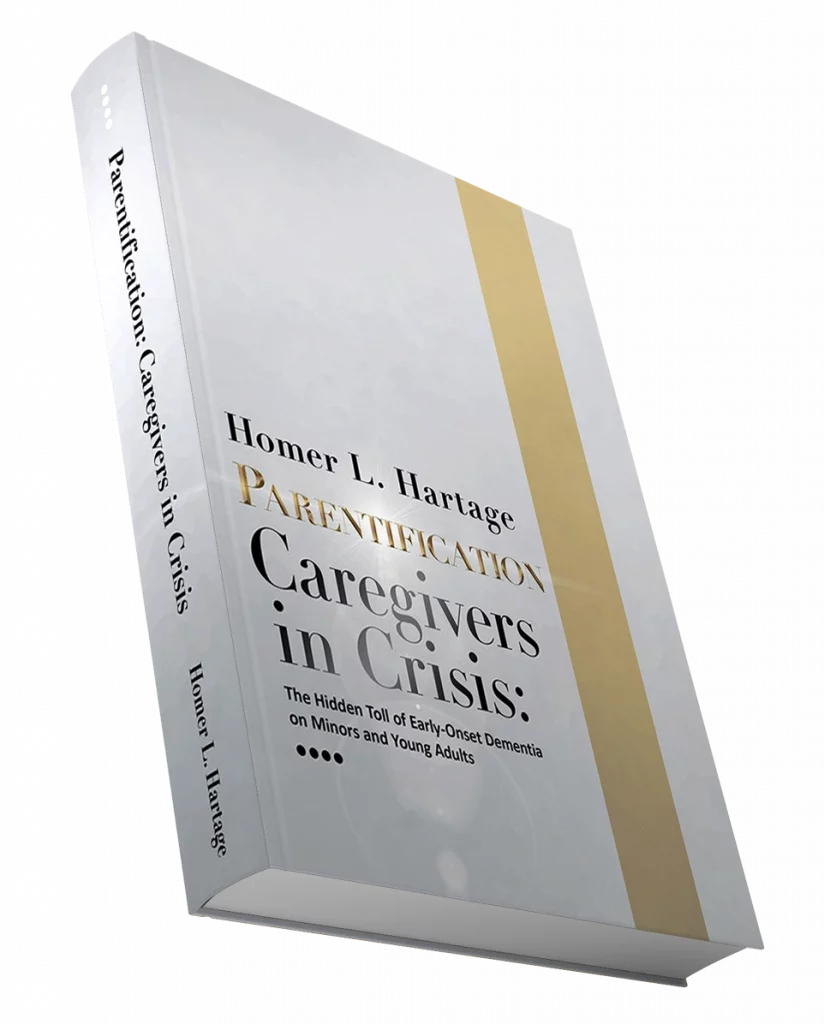
Parentification: Caregivers In Crisis
Every day, countless children step into roles meant for adults. Behind that strength lies a hidden cost: the loss of childhood, unspoken stress, and emotional wounds that can last a lifetime.
When Children Carry Adult Responsibilities
This book shines an unflinching light on the emotional and psychological weight carried by children who are forced to grow up too soon.