
Parentification Resource Center
Building a Circle of Care: How to Support a Young Caregiver
There’s a story adults like to tell when a family is under strain: the mature teenager who holds it all together. Teachers praise the responsibility. Extended family calls it strength. Sometimes the young person even clings to the role themselves, because competence can feel safer than admitting fear. But that praise can quietly hide the hazard underneath it. When a young person becomes a household’s main stabilizer, the cost isn’t only time. It’s sleep, attention, and any real sense of having an exit.
The point isn’t that every young caregiver is destined to struggle. It’s that “just let them push through” is not a neutral choice. When adults treat youth caregiving as ordinary maturity instead of responsibility that needs to be redistributed, risk rises quietly, and predictably.
This is where a circle of care comes in.
What a Circle of Care Actually Is
A circle of care is the practical opposite of parentification. It takes open-ended adult tasks and anchors them back in adult hands, adult services, and predictable routines, protecting what a young person actually needs in order to keep developing normally: sleep that isn’t constantly interrupted, school or work that stays possible, relationships that don’t have to be sacrificed, and a nervous system that’s occasionally allowed to stand down.
It also solves a specific structural problem: the single point of failure. In many households managing early-onset dementia or another serious impairment, everything works only because one young person is quietly compensating for the gap. If that person gets sick, has exams, moves out, or simply reaches their limit, the entire system can collapse at once. A circle of care prevents that cliff by making support shared, explicit, and repeatable, rather than dependent on one person’s endurance.

The Five-Spoke Model
Picture the household at the center of a wheel, held up by five spokes. None of these are luxuries. Together, they’re closer to the minimum structure needed to keep a young person from becoming the household’s default adult.
Spoke 1: One reliable adult anchor. This is the most important spoke, because it creates continuity. The anchor is the adult who can actually be reached when something goes wrong, who follows through, and who can take on adult-level tasks without turning a young person’s honesty into a crisis. The anchor doesn’t need to be perfect. They need to be reliable. It might be an aunt, a neighbor, a coach, a school counselor, or a family friend already somewhat involved. Importantly, a young person shouldn’t be left to find this person on their own, the adults around them need to do that recruiting.
Spoke 2: School or campus support. This is where patterns show up earliest, and where the right accommodations can prevent long-term academic fallout. It’s not only about counseling access. It’s practical flexibility: attendance pathways that don’t punish a family crisis, realistic deadlines, structured check-ins, and a communication plan that respects privacy. Without this spoke, students end up doing schoolwork at midnight after care duties are finally done, exactly the pattern linked to sleep loss and rising symptoms.
Spoke 3: Mental health support that fits the situation. The right kind of support isn’t “fix your attitude,” it’s care that understands the emotional reality of caregiving: grief that starts long before any death, loyalty conflicts, anger tangled up with love, and a level of responsibility peers simply don’t carry. Support that names those realities, rather than treating the young person as simply “stressed,” tends to be far more effective.
Spoke 4: Practical caregiving relief. This is the spoke that changes physiology, not just mood. A young caregiver cannot recover if they never get off-duty. Predictable time off, whether through respite care, adult day programs, or in-home help, restores sleep and lowers the constant hypervigilance that comes with never fully being able to relax. Without this kind of relief, every other form of support becomes just another coping strategy layered on top of an unsustainable schedule.
Spoke 5: Legal and administrative support. Paperwork has real weight. When benefits navigation, consent decisions, and legal forms default to the youngest competent person in a household because there’s no one else to handle them, that young person effectively becomes the family’s unpaid case manager. Moving this responsibility back into adult hands, whether a relative, an attorney, or a professional guardian, is one of the cleanest, most concrete forms of load reduction available. Our article Protecting a Young Caregiver’s Future goes deeper into this specific spoke.
YOUNG CAREGIVER SUPPORT TOOL
One-Month Circle of Care Change Plan
A fill-in template for moving adult responsibility off a young caregiver’s plate, one stabilizing step at a time.
A Phased First-Month Plan
A circle of care doesn’t need to be built perfectly, or all at once. Most families do better with one stabilizing move per week, done consistently, rather than an attempt to solve everything simultaneously.
Week 1: Stabilize. Identify the anchor adult. Create a minimal safety plan, three things written down and shared with that anchor: who to call in a crisis, what “unsafe” actually looks like in this specific household, and what the young person is not responsible for handling alone. If there’s a wandering risk, a medication risk, or any safety concern, the plan should include real adult coverage, not “the teenager will keep watch.”
Week 2: Add support and reduce secrecy. Identify a counseling option and, if possible, a peer or group option. Secrecy is exhausting on its own, since it forces a young person to manage the story on top of managing the actual caregiving. Reducing it, even a little, tends to reduce the load noticeably.
Week 3: Move one task off the young person’s plate. This is where the circle becomes real rather than theoretical. Pick one recurring task currently sitting with the teenager or young adult, appointment scheduling, prescription refill calls, insurance paperwork, coordinating transportation, and hand it to a specific adult, with a specific start date. Don’t replace the task with “just remind me.” Replace it with a person, a time, and an actual plan.
Week 4: Formalize and review. Lock in whatever is working: school accommodations, workplace scheduling adjustments, a regular check-in with the anchor adult, and a repeatable respite routine. Then honestly review what changed the most, and what’s still breaking. A circle of care isn’t something you finish. It’s something you maintain.
What Good Counseling Looks Like for a Young Caregiver
Therapy that assumes a teenager can simply “prioritize themselves” in a vacuum tends to miss the point. What actually helps usually shares a few features: it’s grief-aware, recognizing that in early-onset dementia, the loss isn’t only in the future, it’s already happening in the present, in ways that reshape family relationships in real time. It teaches boundaries without framing them as abandonment, since a boundary is what keeps a young caregiver from becoming the household’s entire emergency plan. And it offers tools that actually fit a young person’s real schedule, since breathing and grounding techniques only help if they can be used in the six minutes available in a school bathroom, not just in a fifty-minute session.
Peer Support Matters More Than It Might Seem
Isolation is one of the most corrosive parts of youth caregiving. When a teenager believes nobody else lives like this, shame grows quietly in the space where connection used to be. Meeting even a few peers who understand night monitoring, missed events, and the constant mental checklist of caregiving can make an experience feel nameable instead of alien. Peer support can look like a school-based group, a community organization, or a moderated online space, whichever is realistically accessible given a family’s schedule and comfort with disclosure.
Where to Start
If you’re supporting a young caregiver right now and aren’t sure where to begin, start with Week 1 above: name an anchor adult, and write down a basic safety plan together. Everything else in the circle can be built from there, one week and one task at a time.
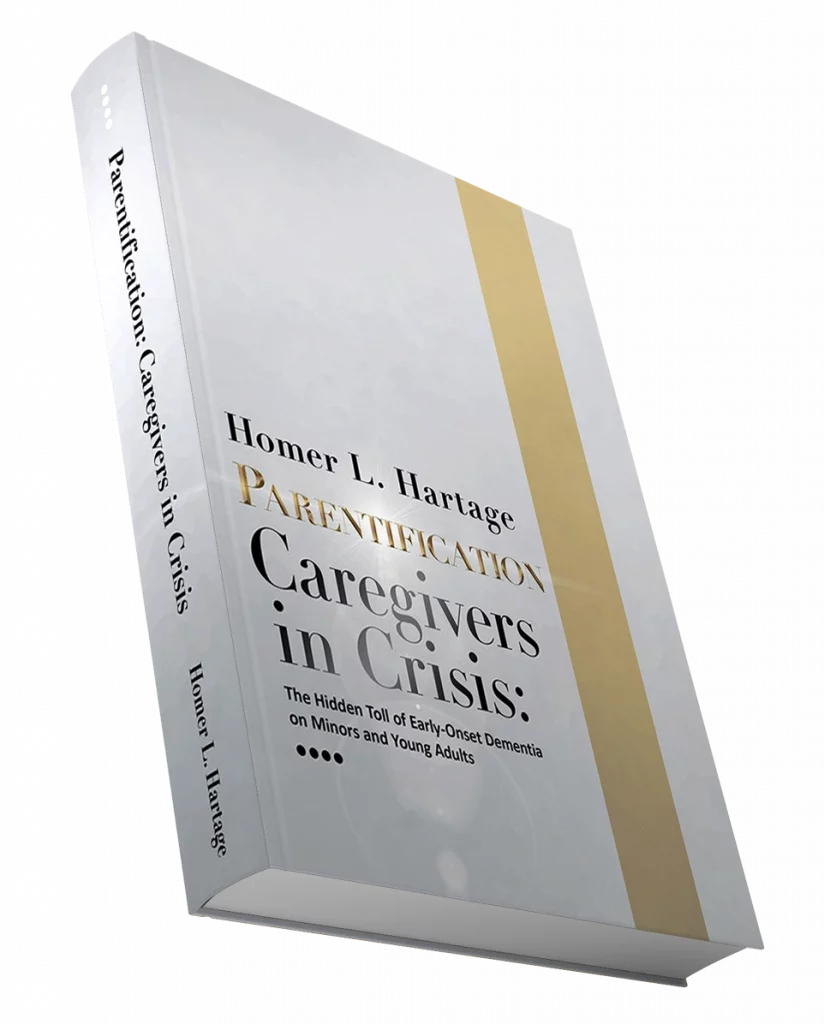
Parentification: Caregivers In Crisis
Every day, countless children step into roles meant for adults. Behind that strength lies a hidden cost: the loss of childhood, unspoken stress, and emotional wounds that can last a lifetime.
When Children Carry Adult Responsibilities
This book shines an unflinching light on the emotional and psychological weight carried by children who are forced to grow up too soon.